


A funeral celebrant is a professionally trained individual who leads and conducts funeral ceremonies. Unlike religious leaders who usually follow the structure of a particular faith, celebrants tend to be independent and are able to provide highly personalised services. These may be non-religious, semi-religious, or spiritual in nature—based entirely on the wishes and beliefs of the deceased and their family.
Celebrants are not limited by a set script or tradition. This means they can create a meaningful ceremony that reflects the unique life, personality, and values of the person who has died. Whether the family prefers a traditional tone, something light-hearted, or a ceremony filled with poetry, music, and personal anecdotes, a celebrant can tailor the service to suit.

Why More People Are Choosing Funeral Celebrants?
The number of funeral services led by celebrants has grown significantly in recent years. This shift mirrors changing attitudes towards religion and tradition in the UK. According to Funeral Guide (2024), just 17% of funerals in 2023 were religious, while over 61% of people now say they would prefer their service to be led by a celebrant.
This increase is due to a variety of factors, including:
More flexible ceremony locations (crematoriums, woodland sites, private venues)
Greater diversity in personal beliefs and family traditions
A desire for more freedom and personalisation
Less affiliation with formal religious institutions
If the person who has died and their loved ones are not aligned to any particular religion, a service officiated by a celebrant is an option many people consider.
Celebrants are trained to lead many types of life ceremonies—such as naming ceremonies, weddings, vow renewals, and funerals—but most specialise in one area. Those who focus on funeral services typically receive specific training in bereavement care, ceremonial writing, and public speaking.
What does a funeral celebrant do?
The role of a funeral celebrant usually extends beyond writing and conducting the funeral service. They are involved in supporting the bereaved family, guiding them through the elements of the service and offering advice. This could include suggestions regarding readings, poems, and music, for example. Funeral celebrants can also help with organising the funeral.
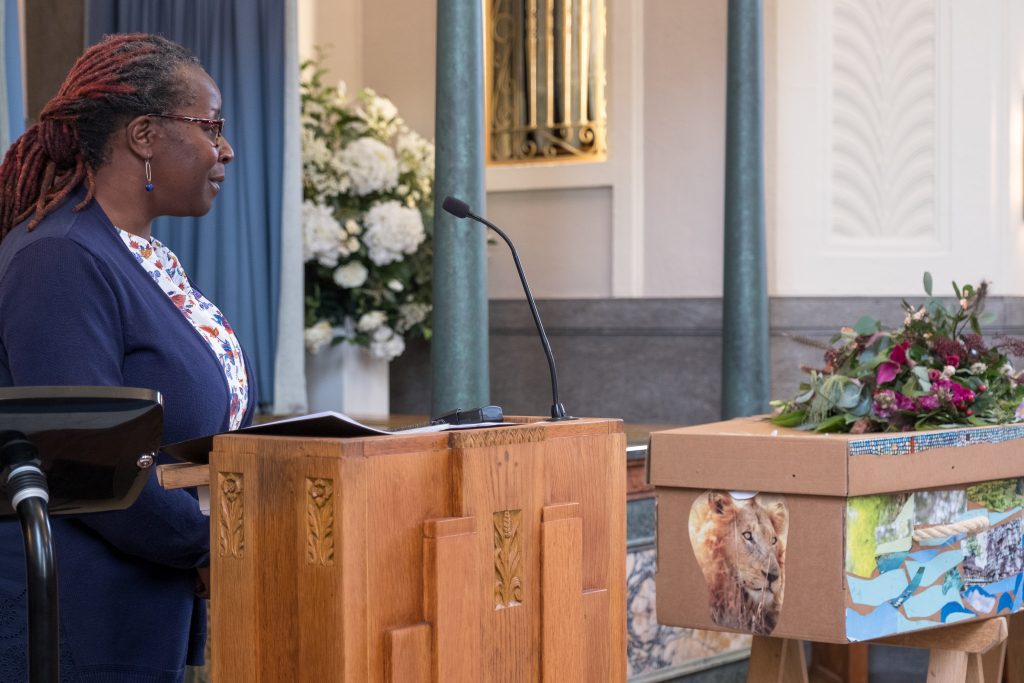
They talk to family members and/or friends to build an understanding of the person who has died … their character, family, career, hobbies, etc. This enables them to write a personalised service and/or eulogy. They aim to celebrate the deceased person’s life while reflecting the wishes of their family. Most celebrants share their plan before the service, enabling loved ones to make changes if needed.
Support on the day
Part of a funeral celebrant’s role is to ensure the funeral runs smoothly. This involves meeting the funeral timings and hosting and officiating the service. They offer invaluable support on the day of the funeral.
Choosing your funeral celebrant
There are two types of celebrant, humanist (no religious content) and civil (not associated with a religion but can incorporate religious content). To find the right celebrant, key questions should be asked (SunLife, 2025):
- What are your values and beliefs?
- How do you conduct the service on the day of the funeral?
- Do you offer help with writing eulogies?
- What experience do you have?
- What other services do you offer?
- Are there any additional charges we should be aware of?
- Do you have any reviews we can read?
If you are planning a funeral and would like to talk to funeral celebrants, the Austin’s team is here to help. We work with several celebrants who have helped organise and officiate funeral services with empathy and professionalism. Please ask us for details.



As a practising Civil funeral celebrant, it is always an immense privilege to work alongside a family’s appointed funeral director to support and offer guidance in the creation of a unique celebration of the life of a loved one.